Pet Insurance in 2026: Is It Worth It for Dogs and Cats?
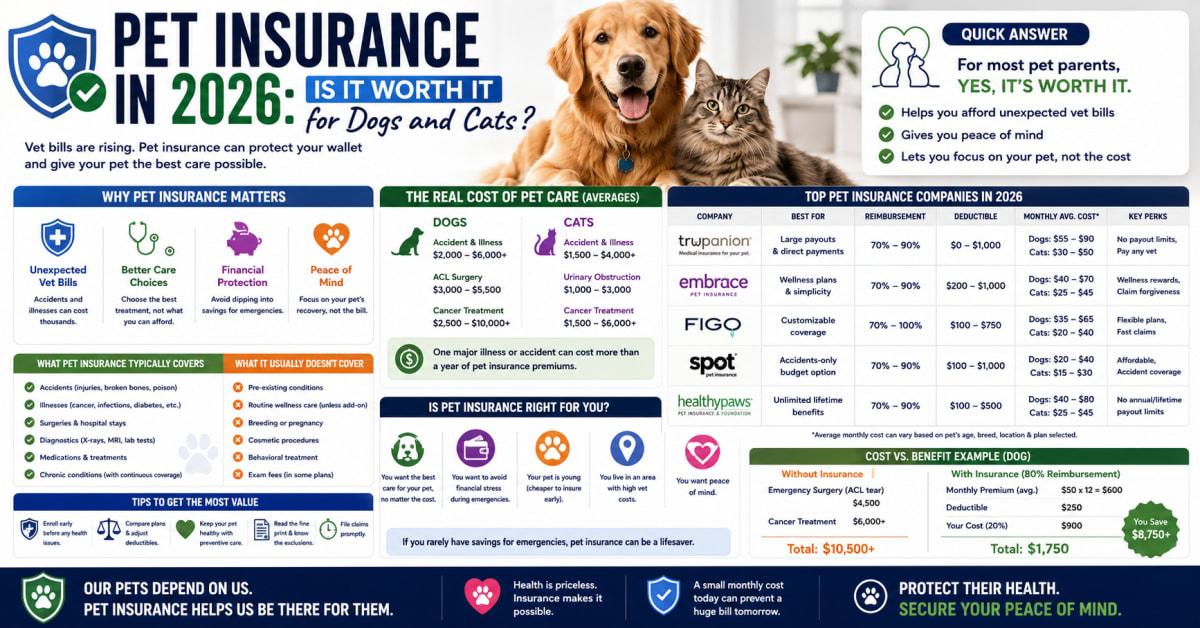
Pet insurance runs roughly $40-70 a month for dogs and $25-35 for cats in 2026. Here's how to tell if it actually pays off for your pet.
Pet Insurance in 2026: Is It Worth It for Dogs and Cats?
A single emergency vet visit can run $3,000 for a cat and $5,000 or more for a dog. Most pet insurance policies cost less than that in an entire year, which is exactly the math worth understanding before you decide.
Pet insurance in 2026 sits at an interesting crossroads: premiums have crept up alongside rising veterinary costs, but so has the price of care itself, making the coverage math more relevant than ever. This guide breaks down what pet insurance actually costs this year, where it pays off, where it doesn't, and how to decide if it's worth it for your specific dog or cat.
Pet Insurance — What It Is and Why It Matters
Pet insurance reimburses you for a portion of your dog or cat's veterinary costs after you pay the vet directly and submit a claim. Most standard policies cover accidents and illnesses, while routine or wellness care usually requires a separate add-on.
This matters because veterinary medicine has grown more advanced and more expensive, which means the gap between what pet owners can afford out of pocket and what emergency treatment actually costs has widened in recent years.
Why This Is Important Right Now
Picture a dog owner facing a sudden diagnosis requiring surgery that costs several thousand dollars, with no coverage in place. Many families in that exact situation end up financing the bill with a credit card at a high interest rate, or worse, having to decline treatment entirely.
Veterinary costs have risen noticeably faster than general inflation in the past year, driven partly by more advanced treatment options becoming available. That combination of rising costs and rising capability makes the insurance decision more consequential than it was even a few years ago.
Key Facts About Pet Insurance in 2026
A few core facts explain how pet insurance actually works and what shapes your specific premium. Understanding these upfront makes comparing policies far easier.
- Dog insurance costs more than cat insurance on average — reflecting the fact that dogs tend to file more claims and require costlier treatment overall.
- Accident-only plans cost significantly less than accident-and-illness plans — but they exclude coverage for conditions like cancer, allergies, or chronic illness.
- Premiums rise with your pet's age — enrolling a puppy or kitten typically locks in a lower starting rate than waiting until later in life.
- Breed significantly affects cost — breeds prone to genetic conditions, like French Bulldogs or Persians, typically carry higher premiums than mixed breeds.
- Preexisting conditions are generally excluded — though some curable or symptom-free chronic conditions may still qualify for coverage depending on the insurer.
What the Industry Data Shows
Industry data suggests that dog insurance premiums nationally average somewhere in the $40 to $70 per month range for standard accident-and-illness coverage, while cat premiums typically average $25 to $35 per month, though exact figures vary meaningfully by source, location, and coverage level.
Analysis from outlets like NerdWallet and Forbes Advisor has noted that veterinary care costs have climbed at a pace outstripping general inflation over the past year, which helps explain why premiums have also trended upward across most major providers.
Benefits and Real Opportunities
Beyond simply covering costs, the right pet insurance policy creates real peace of mind and better care decisions.
- Financial protection against major emergencies — a single serious illness or accident can cost thousands, and insurance absorbs much of that shock.
- Freedom to choose treatment based on your pet's needs, not just cost — coverage removes some of the financial pressure to decline a recommended treatment.
- Lower long-term premiums when you enroll early — insuring a young, healthy pet typically locks in more favorable rates before any conditions develop.
- Customizable coverage — adjustable deductibles, reimbursement rates, and annual limits let you balance premium cost against out-of-pocket risk.
Costs and What to Expect
National averages for accident-and-illness coverage generally land around $40 to $70 per month for dogs and $25 to $35 per month for cats, though individual quotes can range considerably wider depending on your pet's age, breed, and location, with some policies running as low as $20 or as high as $150 or more per month. Accident-only plans, which skip illness coverage entirely, typically cost noticeably less, often in the range of $15 to $25 per month.
Most policies come with a deductible, commonly between $250 and $500 annually, along with a reimbursement rate, typically 70% to 90% of the covered cost after the deductible is met. Annual coverage limits vary from around $5,000 to unlimited, with unlimited coverage naturally costing more per month. Wellness add-ons for routine care like vaccinations or annual exams typically add a modest amount to your monthly premium, but are usually not part of standard accident-and-illness coverage.
Location matters more than many pet owners expect, since veterinary costs and therefore premiums vary meaningfully by state and even by zip code, with densely populated, higher cost-of-living areas generally seeing higher rates.
Accident-Only Coverage vs Accident-and-Illness Coverage vs Comprehensive Plus Wellness: Which One Is Right for You?
| Option | Best For | Pros | Cons |
|---|---|---|---|
| Accident-Only Coverage | Budget-conscious owners wanting basic injury protection | Lowest monthly premium among the three options | No coverage for illnesses like cancer, allergies, or infections |
| Accident-and-Illness Coverage | Most pet owners wanting balanced, comprehensive protection | Covers the majority of serious, costly health events | Meaningfully higher premium than accident-only plans |
| Comprehensive Plus Wellness | Owners wanting routine care costs covered too | Covers vaccinations and checkups alongside emergencies | Highest monthly cost of the three options |
Who Should Actually Care About Pet Insurance?
This matters most for owners of young, healthy pets who want to lock in lower premiums before any conditions develop, and owners of breeds known for genetic health risks, where a major claim is statistically more likely. It's also relevant for anyone who wouldn't be able to comfortably cover a several-thousand-dollar emergency vet bill out of pocket without financial strain.
Mistakes Most People Make
A handful of habits lead pet owners to either overpay or end up underinsured.
Waiting until a pet shows signs of illness before buying insurance often means that condition gets excluded as preexisting. Enrolling while your pet is young and healthy avoids this problem entirely.
Choosing the cheapest available policy without checking the annual coverage limit can leave you underinsured exactly when a major claim hits. Comparing the coverage limit alongside the premium, not just the monthly cost, prevents that gap.
Assuming pet insurance covers routine vaccinations and checkups by default overlooks that most standard accident-and-illness plans exclude wellness care unless you add it separately. Confirming what's actually included before enrolling avoids that surprise.
Getting only one quote instead of comparing several providers can mean paying significantly more than necessary for the same pet and coverage level, since rates vary widely between insurers for an identical profile.
What Most Articles Won't Tell You
Most coverage focuses on the monthly premium, but the deductible and reimbursement rate combination often matters more for your actual out-of-pocket cost during a real claim. A lower premium paired with a higher deductible and lower reimbursement rate can end up costing you more during an actual emergency than a slightly higher premium with better terms.
There's also a detail often missed: some insurers offer exam-fee coverage as an optional add-on, reimbursing $50 to $200 per vet visit, which can meaningfully change the math if your pet needs frequent checkups for an ongoing condition.
Advanced Moves Worth Knowing
Choosing a higher deductible in exchange for a lower monthly premium can make sense if you have an emergency fund that could comfortably absorb a larger upfront cost, effectively self-insuring the smaller claims while keeping coverage for major events.
Requesting quotes from at least three providers for the exact same coverage profile often reveals a meaningfully cheaper option, since pricing for an identical pet and policy can vary significantly between insurers.
Frequently Asked Questions
Is pet insurance worth it for an older dog or cat?
It can be, but premiums are typically higher for senior pets, and some insurers limit or decline coverage for pets past a certain age. It's still worth comparing quotes, since even limited accident-only coverage may offer meaningful protection.
Does pet insurance cover preexisting conditions?
Generally, no. Most insurers exclude preexisting conditions, though some curable conditions that have been symptom-free for a set period may become eligible for coverage again, depending on the specific policy.
How does pet insurance reimbursement actually work?
You typically pay the vet bill upfront, then submit a claim to your insurer, who reimburses you a percentage of the covered cost after your deductible is met, based on your policy's reimbursement rate.
Are certain dog or cat breeds more expensive to insure?
Yes, breeds with known genetic health risks, like French Bulldogs or Persians, typically carry higher premiums than mixed-breed pets, reflecting their higher likelihood of needing costly treatment.
Should I get accident-only or accident-and-illness coverage?
Accident-and-illness coverage offers broader protection and is generally recommended for most pet owners, since illnesses like cancer or chronic conditions can be far more expensive than accidental injuries alone. Accident-only coverage suits owners specifically prioritizing a lower premium.
The Bottom Line on Pet Insurance in 2026
Pet insurance in 2026 isn't a universal yes or no. It's a genuine financial calculation based on your pet's age, breed, and your own ability to absorb an unexpected vet bill. For a young, healthy pet, enrolling early often locks in lower rates before any conditions can exclude coverage down the line. Compare at least a few providers for your specific pet before deciding, and weigh the deductible and reimbursement rate just as carefully as the monthly premium. A single major emergency can make the math clear almost instantly.
Read Next

Shock Ruling: Kansas Court Boosts Stormont Vail in Medicaid Dispute
Urgent: CMS Issues Warning on Medicaid Provider Revalidation—Big Changes Ahead!

Warning: NC Medicaid Bill Flaws Could Lead to Financial Crisis!

Crisis in Rural Health: Medicaid Loss Impact in NH

Shock as CarolinaEast Drops Medicare Advantage Coverage: What It Means for You