Life Insurance Explained: How to Protect Your Family
A clear guide to life insurance policies, costs, and how to choose the right coverage for your family's needs.

Life Insurance Explained: How to Protect Your Family
Did you know 40% of Americans have no life insurance at all? That means millions of families are one tragedy away from financial disaster. Here's how to make sure yours isn't one of them.
Life insurance isn't about you - it's about protecting the people who depend on your income. We'll walk you through the different policy types, show you how much coverage you actually need, and reveal how to get the best rates. By the end, you'll know exactly how to safeguard your family's future.
Life Insurance - What It Is and Why It Matters
Life insurance is a contract where you pay premiums in exchange for a death benefit paid to your beneficiaries. It exists to protect your loved ones from financial hardship if you die unexpectedly. Industry data shows families with adequate coverage recover financially 3x faster after a loss.
Think of it as income replacement. If you're the primary breadwinner, your paycheck likely pays the mortgage, car notes, and grocery bills. Life insurance ensures those obligations get covered even if you're not there. The average policy pays out $250,000 - enough to give your family breathing room during their hardest days.
Why This Is Important Right Now
Here's the thing: life insurance gets more expensive every year you wait. A 30-year-old pays about $26/month for $500,000 of coverage. That same policy costs $47/month at age 40. Locking in rates now saves thousands over time.
Plus, your health affects eligibility. Developed high blood pressure? That could mean higher premiums. Waiting until you have health issues might leave your family underprotected.
Key Facts About Life Insurance
Before comparing policies, understand these core concepts that affect every decision:
- Death Benefit - The tax-free lump sum paid to beneficiaries. Calculate this as 10-12x your annual income plus major debts.
- Premium - Your monthly or annual payment. Term life offers the lowest premiums for pure protection.
- Policy Term - How long coverage lasts. Term policies cover 10-30 years; whole life lasts indefinitely.
- Underwriting - The health and lifestyle review that determines your rates. Smokers pay 2-3x more.
- Riders - Add-ons like disability waivers or child coverage. Useful but increase costs.
What the Industry Data Shows
Industry analysis consistently shows term life insurance provides the most coverage per dollar. A healthy 35-year-old can get $1 million in coverage for under $50/month with a 20-year term policy. Whole life policies cost 5-10x more but include cash value components.
Research in this field shows approximately 60% of policyholders choose term coverage. The remaining 40% opt for permanent policies, often for estate planning needs or as forced savings vehicles.
Benefits and Real Opportunities
Beyond the obvious death benefit, life insurance offers strategic advantages most people overlook:
- Debt Protection - The average American dies with $62,000 in debt. Life insurance prevents survivors from inheriting your financial obligations.
- Business Continuity - Key person coverage helps businesses survive if a founder or essential employee dies unexpectedly.
- College Funding - A $500,000 policy could cover 4 years at most state universities if the worst happens.
- Final Expenses - The average funeral costs $7,000-$12,000. Even a small policy prevents this burden.
Term vs Whole vs Universal: Which Policy Fits You?
| Option | Best For | Pros | Cons |
|---|---|---|---|
| Term Life | Young families needing affordable coverage | Lowest premiums; simple to understand; convertible options | No cash value; expires after term ends |
| Whole Life | High earners wanting lifelong coverage | Guaranteed death benefit; cash value grows tax-deferred | 5-10x more expensive than term; complex fees |
| Universal Life | Flexible permanent coverage seekers | Adjustable premiums/death benefit; cash value component | Requires active management; sensitive to interest rates |
Who Should Actually Care About Life Insurance?
If anyone depends on your income - whether it's a spouse, children, or aging parents - you need coverage. Parents with young children have the most urgent need, but singles with cosigned debts or business partners also benefit. The sweet spot is buying enough to replace your income for 10-12 years while keeping premiums under 1% of your annual salary.
Mistakes Most People Make
Buying based on price alone. The cheapest policy isn't best if it won't cover your actual needs when required.
Underestimating coverage needs. $250,000 sounds like a lot until you subtract mortgage, college costs, and living expenses.
Waiting until health declines. That sleep apnea diagnosis could mean 25% higher premiums next year.
What Most Articles Won't Tell You
Group life insurance through work is rarely enough. These policies typically cover just 1-2x your salary and disappear if you change jobs. They're supplements at best.
Also, insurers care more about your driving record than gym habits. Multiple speeding tickets can increase rates more than being 20 pounds overweight.
Frequently Asked Questions
How much life insurance do I really need?
Aim for 10-12 times your annual income plus major debts like mortgages. A $75,000 earner with a $200,000 mortgage would need about $1.1 million in coverage.
Can I get life insurance with pre-existing conditions?
Yes, but costs vary. Controlled diabetes might mean 25% higher premiums, while recent cancer diagnoses could lead to temporary declines. Specialized insurers cover higher-risk cases.
What's better - term or whole life insurance?
Term works for 90% of families needing pure protection. Whole life makes sense if you maxed out other tax-advantaged accounts and need permanent coverage.
How do life insurance payouts work?
Beneficiaries file a claim with the death certificate. Most insurers pay within 30 days, either as a lump sum or structured payments. The money is tax-free.
When should I review my life insurance policy?
Re-evaluate after major life events: marriage, children, home purchases, or income changes of 25% or more. Review coverage amounts every 3-5 years.
The Bottom Line on Life Insurance
Life insurance is the ultimate act of responsibility for those you love. The right policy costs less than daily coffee but provides profound peace of mind. Start with term coverage equal to 10-12 times your income, then reassess as your family grows and finances change. What matters most isn't the product - it's taking action today to protect tomorrow.
Read Next
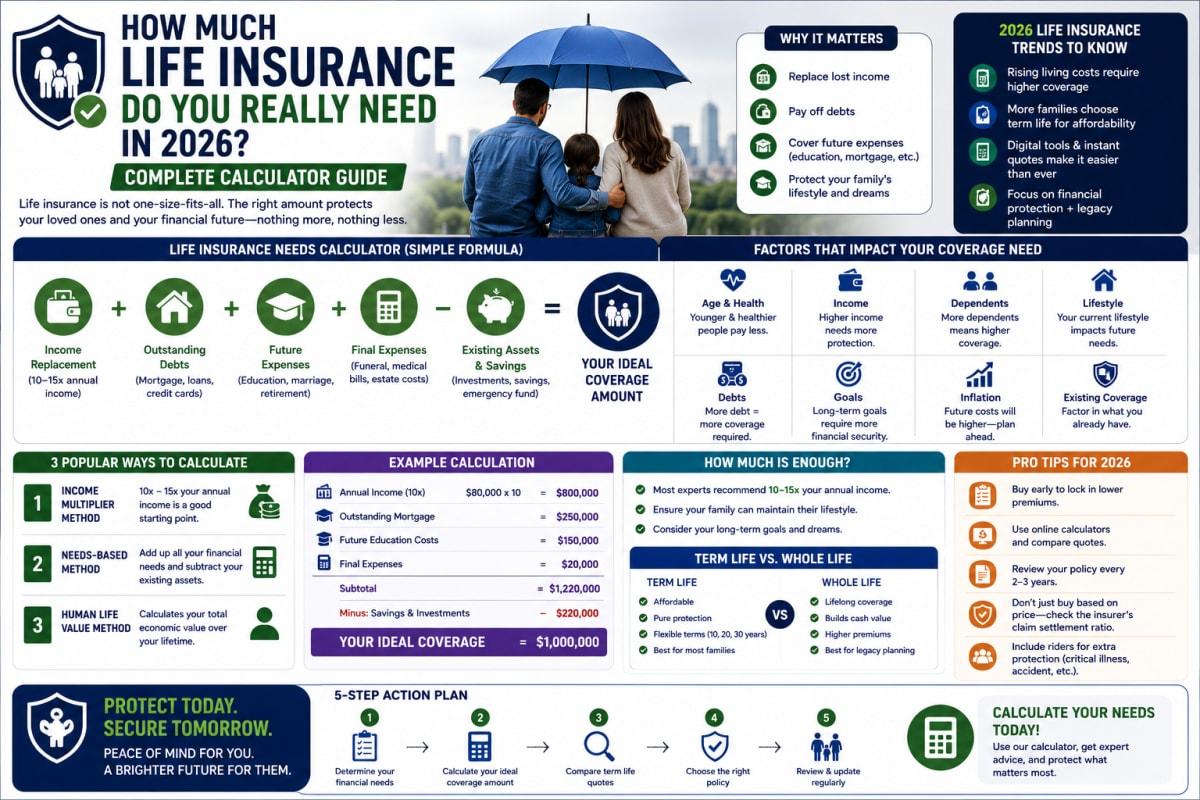
How Much Life Insurance Do You Need? 2026 Calculator Guide
Government Health Insurance in Australia Explained

Usage-Based Insurance for Cars: Complete 2026 Guide

Travel Insurance for Americans: What You Need in 2026

Health Insurance in America: Your Complete 2026 Guide