How to Start Budgeting With No Savings: A Beginner's Step-by-Step Guide
Starting from zero isn't a disadvantage — it's a clean slate. This step-by-step guide shows beginners exactly how to build a working budget with no savings, no spreadsheet skills, and no shame, using a simple system you can start today with whatever is in your bank account right now.
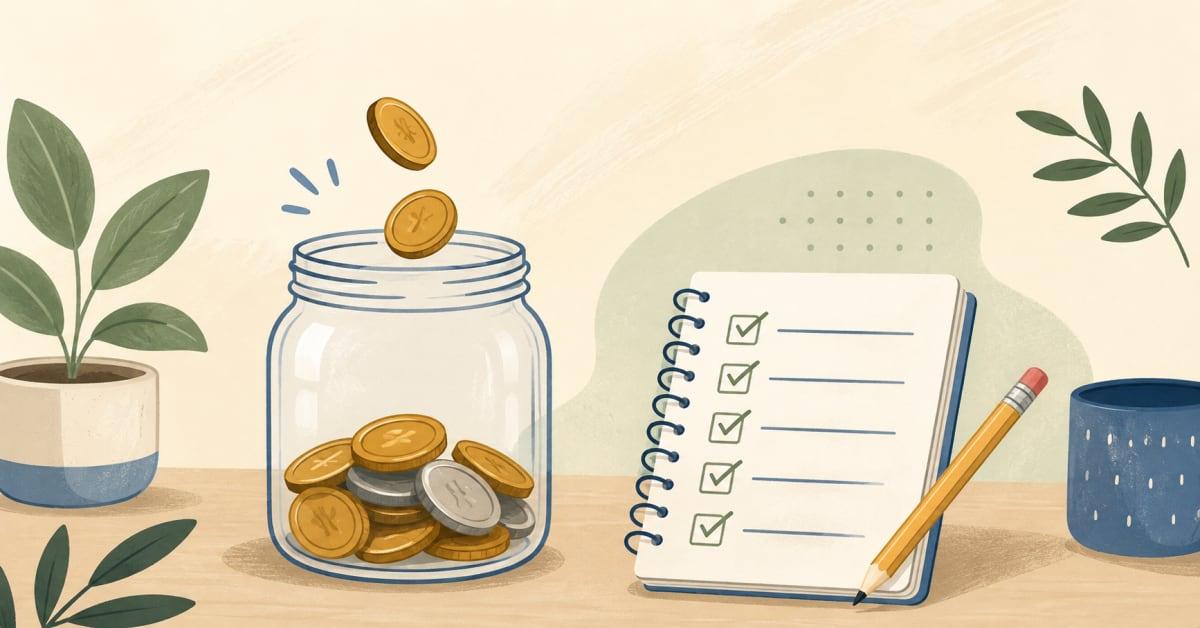
If you're staring at a bank account with $0 in savings and wondering how anyone budgets when there's nothing to work with, you're not alone. According to Bankrate's 2026 Emergency Savings Report, roughly one in four U.S. adults currently has no emergency savings at all — the highest level ever recorded. So if this is you, you're not behind. You're just starting where a huge number of people are starting too.
The good news: budgeting doesn't require savings to begin. It requires a plan for the money you already earn. Here's exactly how to build that plan from scratch, even if your account is sitting at zero right now.
Step 1: Stop Thinking of Budgeting as "Restriction"
Most people avoid budgeting because it feels like punishment. Flip that. A budget isn't a list of things you can't buy — it's a plan that tells your money where to go before it disappears on its own. With no savings cushion, this step matters even more, because every dollar needs a job.
Step 2: Write Down What You Actually Earn
Not what you think you earn — what actually lands in your account. If your income is irregular (freelance, gig work, hourly shifts), use your lowest month from the past 3 months as your baseline. Budgeting off your best month is the fastest way to end up short.
Step 3: List Every Expense, Even the Small Ones
Pull up your last 30 days of bank and card transactions and write down everything: rent, phone bill, subscriptions, coffee, takeout. Most beginners underestimate spending by 15–20% simply because small purchases don't feel "real." Seeing the full list is often the biggest wake-up moment in this whole process.
Step 4: Use the "Give Every Dollar a Job" Method
This is the core beginner-friendly system, and it works especially well with zero savings because it doesn't assume you have any wiggle room:
- Essentials first: rent, utilities, groceries, minimum debt payments, transportation
- Small savings buffer: even $10–$25 per paycheck, non-negotiable, moved automatically
- Everything else: whatever is left, split between wants and extra debt payoff
Every single dollar gets assigned somewhere on paper before it's spent. Nothing floats around "just in case" — that's how savings never gets built.
Step 5: Automate the Smallest Possible Savings Habit
Forget the advice to save 20% of your income if you're starting from zero — it's discouraging and unrealistic for many beginners. Instead, automate a transfer of $5–$20 per paycheck into a separate savings account the day you get paid. The amount matters far less than the habit. You can increase it later once the habit is automatic.
Step 6: Track for 30 Days Before Judging Yourself
Your first month's budget will be wrong. That's normal — you're estimating categories you've never measured before. Track actual spending against your plan for 30 days, then adjust. Most beginners need 2–3 months before their budget actually reflects reality.
Step 7: Pick One Tool and Stick With It
You don't need a premium app to start. A free budgeting app, a simple spreadsheet, or even a notes app works — the tool matters far less than consistency. Pick the one you'll actually open every week, not the one with the most features.
Common Mistakes Beginners Make (and How to Avoid Them)
- Making the budget too strict: a budget with $0 for "fun" usually collapses within two weeks. Leave a small buffer, even $10.
- Forgetting irregular expenses: car registration, birthdays, annual subscriptions. Divide these by 12 and set aside a little each month.
- Giving up after one bad month: one overspent category doesn't mean the system failed — it means one number needs adjusting.
Frequently Asked Questions
Can I really start budgeting with no savings at all?
Yes. A budget is a plan for your income, not a reward for having savings already. Many people build their first savings through budgeting, not before it.
How much should a beginner save each month with no savings currently?
Start with whatever feels almost too small to matter — even $5 to $20 per paycheck. Building the habit matters more than the amount in the first few months.
What's the easiest budgeting method for a total beginner?
The "give every dollar a job" method (also called zero-based budgeting) tends to be the most beginner-friendly because it's simple to understand and doesn't require prior financial knowledge.
Final Thoughts
Starting a budget with no savings isn't a setback — it's just the starting line. The goal for month one isn't a perfect budget or a fat savings account. It's simply knowing where every dollar is going. That single habit, repeated consistently, is what eventually builds the savings you don't have yet.
Read Next

Top Dividend Stocks to Buy Now for 2026

Nasdaq Futures Surge After Micron Earnings Shock — Wendy's in Focus

Top Home Loan Options for 2026: Compare Rates & Save

How to Find the Best Mortgage Rates in the USA in 2026

Tech Stocks Stumble: S&P 500, Nasdaq Pause After Micron Shock