Best Debit Card Features for Safe Everyday Spending
The debit card features that actually protect your money day to day—from real-time alerts to instant freeze controls—and how to pick a card built for safety.
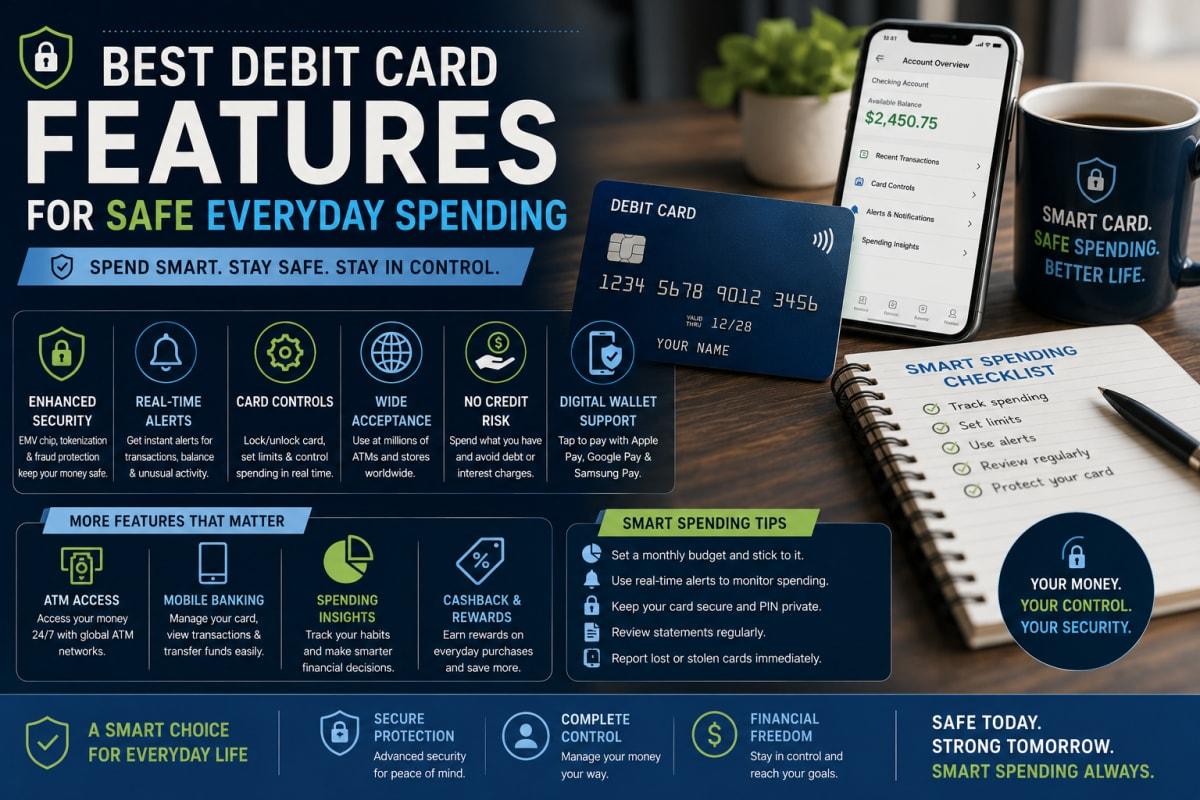
Best Debit Card Features for Safe Everyday Spending
Debit card fraud hits millions of accounts every year, and most victims don't notice until the money is already gone. The right features can catch a problem in minutes instead of weeks.
Not all debit cards protect you the same way. Some banks still rely on outdated fraud detection, while others have built real-time tools that stop suspicious activity before it drains your account. This guide breaks down the debit card features that matter most for everyday safety, what to look for when choosing a bank, and a few protections most people don't know exist until they need them.
Debit Card Features — What They Are and Why They Matter
Debit card features are the built-in tools and protections a bank offers beyond basic swipe-and-pay function—things like fraud alerts, spending controls, and zero-liability policies. They determine how quickly you catch a problem and how much protection you have if something goes wrong.
Unlike credit cards, debit cards pull money directly from your checking account, so unauthorized activity can affect your available cash immediately. That makes safety features far more urgent for debit than for credit.
Why This Is Important Right Now
Picture someone whose card number gets skimmed at a gas pump. Without real-time alerts, they might not notice unauthorized charges until their next statement, by which point overdraft fees and declined payments have already caused a mess.
Digital payments and contactless spending have made card numbers easier to expose across more places than ever. That's why choosing a bank with strong, modern debit protections matters more today than it did even a few years ago.
Key Facts About Debit Card Features
Before comparing banks, it helps to understand the baseline protections that separate a modern debit card from an outdated one. These facts shape what you should expect from any account you open.
- Zero-liability protection isn't automatic everywhere — some banks apply it only if you report fraud within a set number of days.
- Instant freeze controls stop new charges immediately — you can lock a lost or stolen card from an app without canceling it outright.
- Real-time alerts flag activity as it happens — this is often faster than any bank's internal fraud detection system.
- Virtual card numbers limit exposure online — a temporary number can be used for one purchase without exposing your real card details.
- Spending limits can be set per category — some cards let you cap gas, dining, or online spending separately.
What the Industry Data Shows
Industry data suggests that debit card fraud tends to get resolved faster and with less financial disruption when customers use real-time alerts rather than waiting for monthly statements to catch discrepancies. The speed of detection often determines whether a bank can reverse a charge before it clears.
Reporting from outlets like Forbes and the Wall Street Journal has consistently highlighted that banks investing in app-based fraud tools tend to report fewer customer disputes over unauthorized transactions. That trend points toward mobile-first protection becoming the new baseline.
Benefits and Real Opportunities
The right debit card features do more than prevent fraud. They give you daily visibility into your spending and control that a basic account simply doesn't offer.
- Faster fraud recovery — real-time alerts mean you can dispute a charge within hours instead of weeks.
- Better budgeting visibility — instant notifications double as a running log of your spending.
- Safer online shopping — virtual card numbers keep your real account details away from risky merchants.
- Peace of mind while traveling — instant freeze controls let you lock your card the moment it goes missing, anywhere in the world.
Costs and What to Expect
Most standard debit cards linked to a checking account carry no direct fee for the card itself, but monthly maintenance fees on the account can range from $0 to around $15 depending on the bank and whether you meet minimum balance requirements.
Out-of-network ATM fees typically run $2.50 to $5 per withdrawal, and some banks add their own surcharge on top of what the ATM operator charges. Overdraft fees, where still applicable, commonly fall between $30 and $35 per occurrence, though many banks have reduced or eliminated these in recent years.
Foreign transaction fees on debit purchases abroad often sit around 1% to 3%, so travelers should check this before relying on a debit card overseas.
Traditional Bank Debit Card vs Online Bank Debit Card vs Prepaid Debit Card: Which One Is Right for You?
| Option | Best For | Pros | Cons |
|---|---|---|---|
| Traditional Bank Debit Card | People who want in-person branch support | Face-to-face help and wide ATM networks | Often lower interest on linked savings and more fees |
| Online Bank Debit Card | People comfortable managing money entirely through an app | Typically lower fees and stronger app-based security tools | No physical branch for in-person issues |
| Prepaid Debit Card | People building budgeting discipline or without a bank account | Spending capped at loaded balance, limiting overspending risk | Reload fees and generally weaker fraud protections |
Who Should Actually Care About Debit Card Features?
This matters for anyone who uses a debit card for daily spending, especially frequent online shoppers, travelers, and parents managing a family budget from a shared account. It's also relevant for anyone who's experienced fraud before and wants stronger protection going forward, regardless of how much they typically spend.
Mistakes Most People Make
A handful of habits leave debit card users more exposed than they realize.
Ignoring transaction alerts because they feel like noise means missing the fastest signal that something's wrong. Turning on real-time push notifications instead of email-only alerts closes that gap.
Using a debit card for large online purchases without a virtual card number exposes your real account details to every merchant you buy from. Switching to a virtual number for unfamiliar sites limits that exposure significantly.
Assuming all banks offer the same fraud protection leads people to stick with an account that has weaker safeguards than newer competitors. Comparing zero-liability terms directly, not just assuming they're standard, avoids this mistake.
Waiting for a paper or email statement to review spending delays fraud detection by days or weeks. Checking your account through the app weekly, rather than monthly, catches problems far sooner.
What Most Articles Won't Tell You
Most comparisons focus on rewards and rates, but the instant-freeze feature is often the most underused tool available. It lets you lock your card in seconds if you're not sure whether it's lost or just misplaced, without the hassle of canceling and waiting for a replacement.
There's also a detail many people miss: some banks let you set separate spending limits by merchant category, so even if your card details are stolen, unusual purchases in categories you never use get blocked automatically.
Advanced Moves Worth Knowing
Pairing a virtual card number with a dedicated low-balance checking account for online purchases limits your exposure even further, since a breach only affects a small, replenished balance rather than your main account.
Setting up geographic transaction alerts, where available, flags purchases made outside your usual area instantly, which is especially useful for catching card cloning before it does real damage.
Frequently Asked Questions
Are debit cards as safe as credit cards for everyday spending?
Not automatically, no. Debit cards pull funds directly from your checking account, so fraud can affect your available cash immediately, while credit card fraud typically doesn't touch your money until a dispute is resolved. Strong debit card features narrow that gap significantly.
What should I do immediately if my debit card is lost or stolen?
Freeze the card instantly through your banking app if that feature is available, then report it lost through your bank's fraud line. Acting within minutes rather than hours meaningfully reduces potential unauthorized charges.
Do virtual debit card numbers cost extra?
Usually not. Most banks that offer virtual card numbers include them as a standard feature of their mobile app, with no added fee for generating or using them.
Is an online-only bank safer than a traditional bank for debit cards?
Not inherently safer, but often better equipped with modern fraud tools since their entire experience is built around the app. Traditional banks can offer equally strong protection, but it's worth checking their specific feature list rather than assuming.
How do I know if my bank offers real-time fraud alerts?
Check your banking app's notification or security settings, or call customer service directly and ask specifically about real-time transaction alerts. If your bank only offers email statements or monthly summaries, it may be worth comparing other options.
The Bottom Line on Debit Card Features
The best debit card features aren't flashy—they're the quiet tools that catch problems before they become expensive. Real-time alerts, instant freeze controls, and virtual card numbers do more for your everyday safety than any rewards program ever will. If your current card is missing these basics, it's worth comparing what else is out there. Start by turning on real-time alerts today, and build from there as you evaluate the rest.
Read Next

Shock Probe: State AGs Target OpenAI in Finance Crackdown

Stock Market Shrugs Off SpaceX IPO: What’s Next?

Dow Surges on Iran Deal Hopes; SpaceX Rockets 19% in Debut

Iowa Hospital Lands $27.5 Million Boom Loan - What It Means

Stock Market Surges as Trump’s Iran Plan Sparks SpaceX IPO Boom